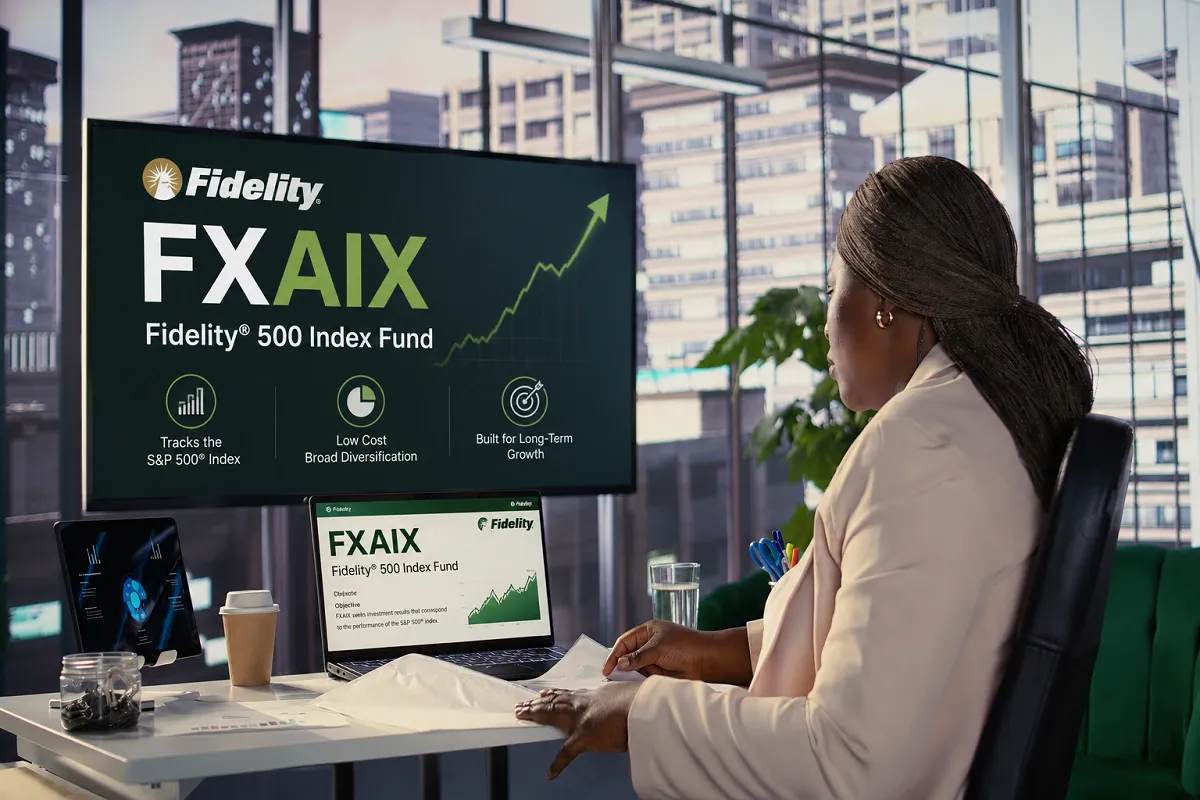
If you want to invest in the US stock market in a low-cost and safe way, Fidelity FXAIX is a name that comes up time after time. FXAIX is actually the stock symbol of Fidelity 500 Index Fund, which tracks the S&P 500 Index, a deliberation of the performance of the 500 largest companies in America. The expense ratio of this fund is just 0.015%, making it one of the cheapest S&P 500 funds on the market. In this article, we will take a comprehensive look at FXAIX’s details, fees, dividends, returns, benefits, risks, and investment method so that you can make an informed decision.
What is Fidelity FXAIX?
FXAIX or Fidelity 500 Index Fund is a mutual fund started by Fidelity Investments in 1988. The fund tracks the S&P 500 Index, which represents about 80% of the market value of the US stock market. The fund includes some of the world’s largest companies, such as Apple, Microsoft, Amazon, Nvidia, and Alphabet.
FXAIX is an inactively managed fund, meaning the fund manager doesn’t pick stocks themselves, but rather follows the composition of the S&P 500 Index. That’s why its fees are very low. Morningstar has given the fund five out of five stars, which is proof of its quality.
FXAIX Expense Ratio and Fees
The importance of fees in investing cannot be ignored. FXAIX’s expense ratio is just 0.015%, meaning if you invest $100,000, the annual fee is only $15. This is one of the cheapest S&P 500 funds available on the market.
Compared to other funds
Vanguard’s VOO and iShares’ IVV, both popular S&P 500 ETFs, have expense ratios of 0.03%, which is double that of FXAIX. Fidelity’s own FNILX (Fidelity ZERO Large Cap Index) is also available at a zero percent expense ratio, but it tracks Fidelity’s own proprietary index, not the S&P 500. Over the long term, the difference can be important; FXAIX saves you more in fees over 30 years on a $300,000 investment.
No minimum investment
There is no baseline investment requirement to invest in FXAIX, and there are no transaction fees. You can start with as little as one dollar. This is especially good for new investors who want to start with less money.
FXAIX’s historical performance and returns
FXAIX’s performance is directly linked to the S&P 500 index. So far in 2026, the fund has returned about 10.20% YTD, compared to the Large Blend category average of about 5.31%, meaning FXAIX has importantly exceeded its category.
Over the past five years, the fund has returned a total return of about 71%. However, it is important to recall that past performance is no guarantee of future performance. Stock markets are volatile, and losses can occur in the short term, as the S&P 500 fell about 4.33% in the first quarter of 2026.
FXAIX Dividend: How much and when?
FXAIX pays a dividend on a quarterly basis. Its dividend yield in 2026 is about 1.03%, and the annual dividend per share is about $2.72. The last dividend payment was made in April 2026, and the next payment is expected in July 2026.
You can take advantage of compound growth if you reinvest dividends. Fidelity has a Dividend Reinvestment Plan (DRIP) that spontaneously buys more shares from your dividends. This is a powerful strategy for long-term investors.
How to invest in FXAIX?
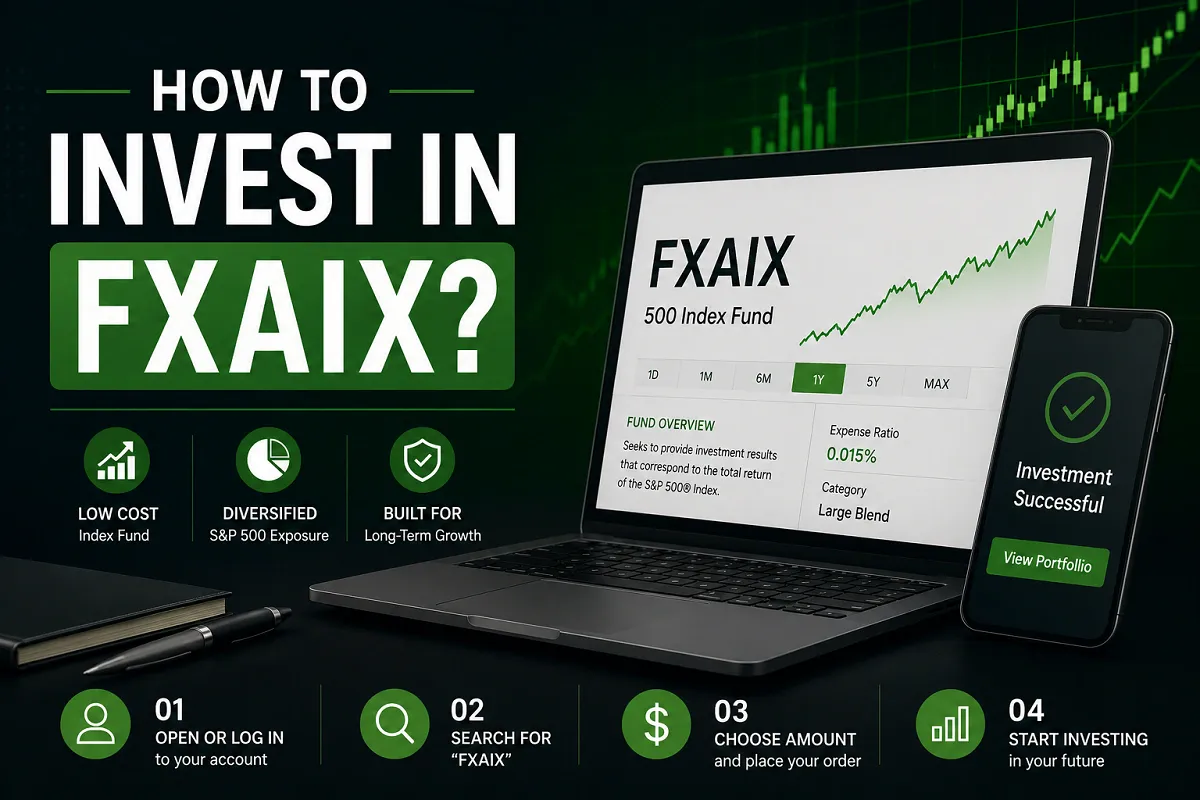
Open a Fidelity account
FXAIX is a Fidelity-specific fund and can only be purchased through a Fidelity brokerage account. You will need to open an Individual Brokerage Account, IRA, or 401(k) at Fidelity.com. Opening an account is free.
Find and buy a fund
After funding your account, type FXAIX into the search bar. You can invest a specific dollar amount; there’s no need to buy a full share. This is the fractional investing feature, which is a big benefit of mutual funds. Orders are typically executed at NAV after the market closes.
One important thing: Portability
FXAIX is a mutual fund, not an ETF, so if you leave Fidelity in the future and switch to another broker, you can’t transfer your FXAIX shares in-kind. You will have to sell them, which could be taxed. This isn’t an issue if you plan to stay with Fidelity for the long term, but if you’re likely to switch brokers, consider an ETF like VOO.
FXAIX Benefits and Risks
Benefits
The first advantage is the exceedingly low expense ratio, 0.015% is one of the lowest fees in the market. The second major benefit is diversification; you invest in 500 of the largest US companies through a single fund. The third benefit is simplicity; you don’t have to pick stocks, the fund itself follows the S&P 500. There is no minimum investment, and the facility of fractional shares is also available.
Risks
Market risk is the biggest risk — if the S&P 500 falls, the price of FXAIX will also fall. The technology sector weighs about 28 to 32% in this index, which means that a deficiency in the tech sector will have a greater impact on the fund. Moreover, FXAIX is limited to the US market; you will have to add separate funds for international diversification.
FXAIX vs VOO: Which is better?
This is a common question. Both track the S&P 500 and perform about the same. The difference is in the structure: FXAIX is a mutual fund, and VOO is an ETF. You can invest fractional dollar amounts in FXAIX, while VOO typically requires you to buy whole shares (although some brokers now offer fractional ETFs). FXAIX has half the expense ratio of VOO, 0.015 percent versus 0.03 percent. But VOO has the advantage that it can be purchased and transferred at any broker. If you’re at Fidelity and plan to stay there, FXAIX is a better choice. If you want flexibility, consider VOO.
What kind of investor is FXAIX best suited for?
FXAIX is best for investors who have a long-term view, such as saving for retirement, funding children’s education, or general wealth building. This fund is also suitable for those who do not want to do active stock picking and want a simple, low-cost solution. However, if you are looking for high returns in the short term or prefer to pick individual stocks, this fund will not fully meet your needs.
Final Words
Fidelity FXAIX is certainly one of the cheapest and most proven funds to invest in the S&P 500. A 0.015% expense ratio, no minimum investment, a five-star Morningstar rating, and over $827 billion in assets all of which prove the strength of this fund. However, there are risks involved with every investment. Past performance is no guarantee of future performance, and there is always the probability of loss in the stock market. Please review your financial situation and goals before investing and seek guidance from a qualified financial advisor if necessary.
Disclaimer:
This article is for educational purposes only and is not investment advice. Please consult a qualified professional before making any financial decisions.
FAQs:
Q: What is the expense ratio of FXAIX?
FXAIX has an expense ratio of just 0.015%, one of the lowest fees available on the market. The annual fee is just $15 per $100,000.
Q: Are FXAIX and VOO the same?
Both track the S&P 500, but FXAIX is a mutual fund available only at Fidelity, while VOO is an ETF that can be purchased at any broker. FXAIX has lower fees than VOO, but VOO is more portable.
Q: What is the minimum investment requirement for FXAIX?
FXAIX has no minimum investment requirement. You can start with as little as one dollar and buy in fractional amounts.
Q: When does FXAIX pay dividends?
FXAIX pays dividends quarterly, typically in January, April, July, and October. The dividend yield in 2026 is approximately 1.03%.
Q: Is FXAIX a safe investment?
FXAIX is a stock market fund, so it involves market risk, prices can go up and down, and losses are possible in the short term. However, over the long term, the S&P 500 has historically delivered positive returns. It is not FDIC insured.
Q: Can I transfer FXAIX to another broker?
No, FXAIX is a Fidelity proprietary mutual fund and cannot be transferred in-kind to another broker. To transfer, you must first sell the shares, which may result in capital gains taxes.
For any suggestions or changes, please contact us.